Reviews on


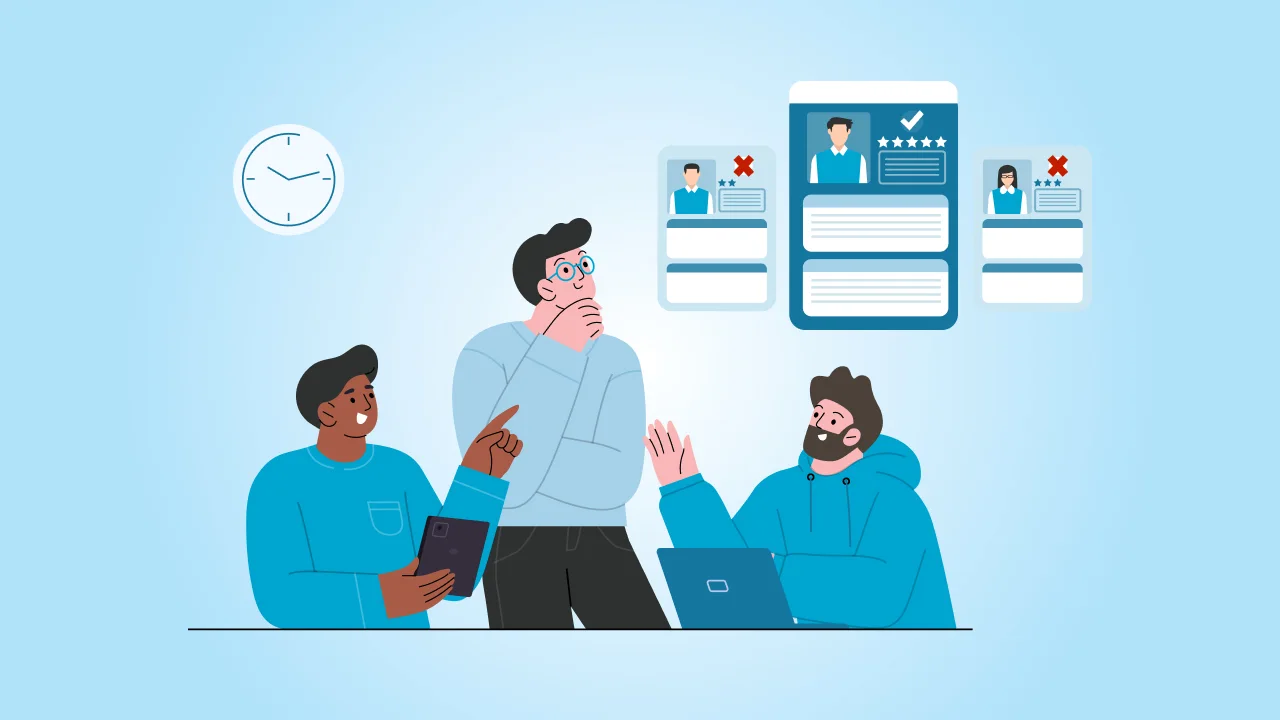
If you are looking to hire a WordPress development team, almost every result on the first page of Google right now is selling you the same thing: dedicated WordPress developers by the hour. Pick a developer from a vetted pool, pay monthly, and go.
This model is everywhere because it works well for the agency. It is pure staffing with predictable revenue, no project management overhead, and no accountability for outcomes. The client gets a person, and whatever happens next is the client’s problem.
I run a WordPress agency, and I think that model is backwards.
A developer writes code, and that is one part of what makes a WordPress project succeed. But a project that actually delivers business results also requires someone making architecture decisions, someone managing the timeline and communication, someone testing across devices and user flows, and someone translating designs into clean, performant frontend code. The average WordPress developer in the US costs $85,000 to $90,000 per year. When you hire one at that cost and expect them to do all five of those jobs, something always suffers. Usually it is testing and communication, sometimes it is architecture, and you do not discover the problem until the site launches and something breaks.
What most businesses actually need is not a developer but a team, and there is a meaningful difference between the two.
What a WordPress Development Team Actually Looks Like

A complete WordPress development team has five core roles. Not every project needs all of them full-time, but every serious project needs all of them present.
Project Manager
Owns the timeline, client communication, scope management, and sprint cadence. The PM is the person who makes sure what the client asked for is what gets built, that the team is working on the right things in the right order, and that the client always knows where things stand.
Without a PM, developers end up making product decisions by default. Scope creeps silently. The client finds out about problems at the end of a sprint instead of the beginning. We have inherited projects where this happened, and the cost to course-correct is always higher than the cost of having a PM from day one.
Technical Lead / Architect
Makes the technology decisions that shape the entire project: theme architecture, plugin selection strategy, ACF block structure, database design, hosting configuration, caching strategy, and performance targets. The lead sets the technical direction and reviews code to make sure individual developer decisions align with the overall architecture.
Without a lead, you get a collection of individual coding decisions that do not form a coherent system. The site might work, but it will be harder to maintain, slower to extend, and more fragile under load.
WordPress Backend Developer
Builds custom post types, plugin integrations, WooCommerce logic, API connections, ACF fields, and server-side functionality. For projects requiring specialized backend expertise, businesses can also hire PHP developers with WordPress experience. This is the core builder. On larger projects, you may have two backend developers working in parallel on different parts of the system.
Frontend Developer
Translates designs into clean, semantic HTML, CSS, and JavaScript. Handles responsive behavior, accessibility, animation, and cross-browser compatibility. Frontend is a different skill set from backend, and on a mid-market site where performance and user experience matter, having a dedicated frontend developer makes a visible difference.
QA Engineer
Tests across devices, browsers, and user flows. Validates Core Web Vitals scores, accessibility compliance, form submissions, checkout flows, and edge cases. Catches the things developers cannot see in their own code.
Without QA, bugs go to production and your customers are the ones who find them. In our experience, the cost of fixing issues after launch runs three to five times higher than catching them during testing.
UI/UX Designer (Optional)
For projects that include original design work rather than building from an existing design system or client-provided mockups. Not always needed, but when it is, having a designer who understands WordPress capabilities and constraints prevents the common problem of designs that look great in Figma but are impractical to build.
“A developer writes code. A team delivers outcomes. The difference shows up in every project we take over from a staffing-model agency.”
Building a WordPress project and want to understand what the right team looks like for your scope?
Why Most Agencies Sell Developers, Not WordPress Development Teams
Selling a team is harder than selling a developer.
A developer is a line item. Here is the resume, here is the hourly rate, here is the start date. The client manages everything. The agency’s job is done the moment the developer logs in.
A team requires the agency to build project structure, communication systems, sprint cadence, and accountability. It means the agency carries the management overhead, not the client. It means the agency is responsible for the outcome, not just the hours.
Most agencies would rather not carry that responsibility. The staffing model is lower risk, lower effort, and lower accountability, which is why the first page of Google for “hire WordPress development team” is dominated by staffing platforms and freelancer marketplaces selling headcount, with developers available in 48 hours and no project management included.
📌 The question you should be asking is not “how fast can I get a developer?” It is “what structure will actually deliver the result I need?” And for any project with real complexity, the answer is a team with defined roles, clear ownership, and someone accountable for the outcome.
The Fractional WordPress Development Team
This is the part most businesses get wrong. They hear “team” and they think five full-time salaries. That is not what we are recommending.
The fractional model gives you a complete team where each role is staffed at the intensity the project actually requires. Not every role needs to be full-time. But every role needs to be present.
A typical fractional WordPress development team breaks down like this:
- Project Manager: 20-40 hours/month. Runs sprints, manages communication, keeps scope and timeline on track. Does not need heavy hours because the work is coordination, not execution. But structured project management is the difference between a project that ships on time and one that drifts.
- Technical Lead: 40-80 hours/month. Sets the architecture, reviews code, makes technology decisions. Heavier during the build phase, lighter during maintenance. The lead ensures that individual developer decisions align with the overall system design.
- Backend Developer: Part-time or full-time. Scales with the project phase. Full-time during active development, part-time during maintenance or lighter phases. This is the role with the most variable workload depending on where the project stands.
- Frontend Developer: Part-time or full-time. Scales with design implementation needs. Full-time when new pages and components are being built. Part-time during phases focused on backend logic or integrations.
- QA Engineer: 40-80 hours/month. Ramps up before milestones and launch. Stays on for ongoing regression testing. QA does not need to be full-time, but it does need to be consistent and present at every stage.
The total cost comes out to roughly two to three full-time resources, but the impact is far greater because you have five distinct roles with five distinct skill sets covering every dimension of the project. A PM keeping everything organized, a lead keeping the architecture clean, developers building, and QA catching what developers miss.
Compare that to hiring two or three full-time developers and expecting them to manage themselves, make architecture decisions, write frontend and backend code, test their own work, and communicate with stakeholders. Those developers are not set up to succeed. A fractional team at the same total cost gives you specialization, accountability, and better results.
📌 Royal Products, one of our mid-market clients, shows what this looks like in practice. They run a fractional WordPress retainer at 160 hours per month, split across a project manager, a technical lead, development, and QA. No single person is full-time on the account, but every role is present every month.
The PM keeps communication and priorities on track. The lead reviews architecture decisions and code quality. The developers build. QA tests before anything goes live. Royal Products gets the coverage and accountability of a full team at a fraction of what it would cost to hire those roles in-house.
What Makes Sense at Each Business Size

Small Business ($0-$2M Revenue)
Hiring a full team does not make sense at this stage, and neither does a fractional model. A small business typically needs a well-defined project with a clear scope: build the site, launch it, hand it over. The right engagement is project-based work with a small agency or a strong individual developer. Define the deliverables, agree on a price, set a timeline, and execute. You need execution, not an ongoing team structure.
📌 This is how we handle smaller clients at cmsMinds. WestNav-Tech, for example, came to us with a defined project. We scoped the work, quoted a price, and delivered. No retainer, no fractional team, no ongoing structure beyond what the project required. That is the right model when the scope is clear and the business does not need continuous development.
Where it goes wrong is when a small business hires a single freelancer for a project that quietly grows in complexity. If your project involves WooCommerce, CRM integration, or custom functionality beyond a standard theme, consider at minimum working with an agency that has a PM and QA process built in, even if you are not paying for those roles as separate line items. And regardless of who builds the site, budget for ongoing WordPress maintenance Services.
Mid-Market ($2M-$100M Revenue)
This is where the fractional model delivers the most value. Your project is complex enough to need architecture, QA, and project management, but your budget does not justify five full-time hires. A fractional team gives you the structure of a complete team at a cost that matches your scope.
This is the model we recommend most often at cmsMinds. A manufacturer doing $30M in revenue needs a website that integrates with their ERP, performs well on Core Web Vitals, ranks in search, and can be managed by a marketing team that does not write code. That project needs a PM, a lead, developers, and QA. It does not need all of them 40 hours a week. The fractional model is built for exactly this situation. For a deeper look at how mid-market companies should evaluate WordPress against other platforms, we wrote a full decision framework.
How We Structure Our WordPress Retainers
At cmsMinds, the fractional team model maps directly to a monthly retainer. You get a dedicated team with defined roles, a set number of hours per month, and a PM who keeps everything on track. The retainer covers ongoing development, maintenance, performance optimization, and new feature work. No per-project scoping. No surprise invoices. A predictable monthly investment with a team that knows your codebase, your business, and your goals.
Most of our mid-market retainers run between 80 and 200 hours per month, depending on the project phase and scope. The team stays consistent, so you are not re-explaining your business to a new developer every quarter.
Enterprise ($100M+ revenue)
At enterprise scale, a full dedicated team makes sense. The website is a critical business system with ongoing development, multiple stakeholders, compliance requirements, and continuous deployment. A full-time PM, lead, developers, and QA, whether in-house or through a long-term agency engagement, is the right investment. The fractional model can still work at the start while the engagement ramps up, but most enterprise clients eventually move to a fully dedicated team that functions as an extension of their internal technology organization.
Hire a Team, Not a Resume
The WordPress agency industry has made it easy to hire a WordPress developer. Marketplaces, staffing platforms, and offshore agencies have made it a commodity. You can have a vetted WordPress developer in your Slack channel in 48 hours.
But easy and effective are not the same thing. A developer without a PM drifts, a developer without a lead makes architecture decisions that create technical debt, a developer without QA ships bugs, and a client without a structured team wonders why the project feels chaotic and the results are not what they expected.
The fractional model fixes this. You get a complete team, not just a person. You get accountability for outcomes, not just hours. You get a PM who knows what is happening, a lead who keeps the technical foundation sound, developers who build what was actually agreed upon, and QA that catches problems before your customers do.
We have been structuring our engagements this way since 2010. It is how we deliver projects on time, on budget, and at a quality level that makes the site a long-term asset for the business. If you are evaluating how to structure your next WordPress project, we are happy to talk through what the right team looks like for your scope and budget.
About cmsMinds
cmsMinds is a WordPress and WooCommerce development agency headquartered in Raleigh, NC. Founded in 2010 by Raj Laddha, the team of 40+ includes project managers, technical leads, backend and frontend developers, QA engineers, and designers working as fractional teams for mid-market and enterprise clients. cmsMinds holds Automattic Agency Pro Partner status across WordPress.com, WooCommerce, Jetpack, and Pressable.
Looking to hire a WordPress development team? Let’s talk about the right model for your project.