
Monthly WordPress Retainer Services
Small website changes pile up when every request means a new quote and another wait. A WordPress development retainer gives you reserved hours each month with a team that already knows your site, so improvements ship steadily instead of in occasional projects.
Reviewed by Raj Laddha, CEO & Founder, on

Automattic Pro Partner
15+ years building only on WordPress
Trusted by Teams That Need Ongoing WordPress Work





Services
Our WordPress Retainer Services
A retainer covers the development work your site needs after launch, delivered by the same team every month.
Feature Development
New custom post types, Gutenberg and ACF blocks, calculators, gated content, and member areas built on your existing theme. You need this when your roadmap has more features than your internal team can ship.
Landing Pages and Templates
Campaign pages and reusable templates built as blocks your editors can reuse. You need this when marketing launches campaigns faster than developers can build pages.
Integrations
CRM, marketing automation, ERP, and payment integrations through the WordPress REST API and webhooks, including HubSpot, Salesforce, and Stripe. You need this when data moves between systems by hand.
Bug Fixes and Improvements
Broken layouts, form errors, plugin conflicts, and small UX changes handled from a shared backlog. You need this when small issues sit unfixed for weeks because there is no one to assign them to.
Performance and Accessibility Work
Ongoing Core Web Vitals improvements and WCAG 2.2 AA fixes scheduled into each month. You need this when audits keep producing the same issues and nobody owns them.
Maintenance Add-On
Core, plugin, and theme updates tested on staging, backups, and monitoring can be bundled into the retainer. You need this when you want one team responsible for both upkeep and development.

The basics
What Is a WordPress Retainer?
A retainer is a monthly agreement that reserves development hours with the same team. It makes sense when your site needs steady development every month, such as new pages, features, integrations and fixes, and you want that work done without a new quote each time.
Without a retainer, every change becomes a small project: a new quote, a new developer, and time spent learning the codebase again. Requests wait in a queue, and the site falls behind what the business needs.
A retainer keeps the same team on your site every month. Work is planned from a shared backlog, tested on staging, and reported against the hours used, so you know what was delivered and what is next.
Why it matters
Why Teams Choose a WordPress Retainer
A retainer suits teams that need steady WordPress development, not a single project with an end date.
Plan your retainerReserved Capacity
Your hours are reserved each month, so requests start without waiting for a new contract or a free developer.
A Team That Knows Your Site
The same developers work on your codebase each month, so there is no ramp-up time on every request.
Predictable Budget
A fixed monthly fee replaces a series of one-off quotes, which makes WordPress spend easier to plan.
Priority Response
Retainer clients get faster response times for urgent issues than ad hoc clients.
Continuous Improvement
Unused hours can go toward performance, accessibility, and UX work that rarely gets a project budget of its own.
Retainer vs. pay-as-you-go
WordPress Retainer vs. Pay-As-You-Go Requests
Occasional fixes can be handled request by request. A retainer makes sense when your site needs development work every month.
| Factor | Pay-as-you-go | Retainer with cmsMinds |
|---|---|---|
| Starting work | A new quote for each request | Hours reserved and ready each month |
| Who does the work | A developer assigned per request | The same team that knows your codebase |
| Urgent issues | Scheduled after retainer work | Priority response for urgent issues |
| Planning | Each request scoped separately | Monthly backlog planned with your team |
| Cost | Costs vary month to month | A fixed monthly fee |
| Reporting | A summary for each request | Monthly report of hours and work delivered |
Why cmsMinds
Why Choose cmsMinds as Your WordPress Retainer Agency
We have supported WordPress sites on long-term retainers since 2010, from marketing sites to 3,000-product WooCommerce stores.
One team for build and upkeep
Feature development, integrations, maintenance, and performance work handled by the same team under one agreement.
Designers and developers
Retainer hours can cover Figma design, front-end, and back-end work, so you do not need separate vendors.
Dedicated Account Manager
A Raleigh-based Account Manager plans each month with you and keeps the backlog moving.
Staging first, every time
Changes are reviewed on staging and deployed through Git, with backups ready to roll back.
Transparent reporting
A monthly report shows hours used, work delivered, and what is planned next.
Flexible hours
Increase or reduce your monthly hours with advance notice as your roadmap changes.
Case studies
WordPress Retainer Case Studies
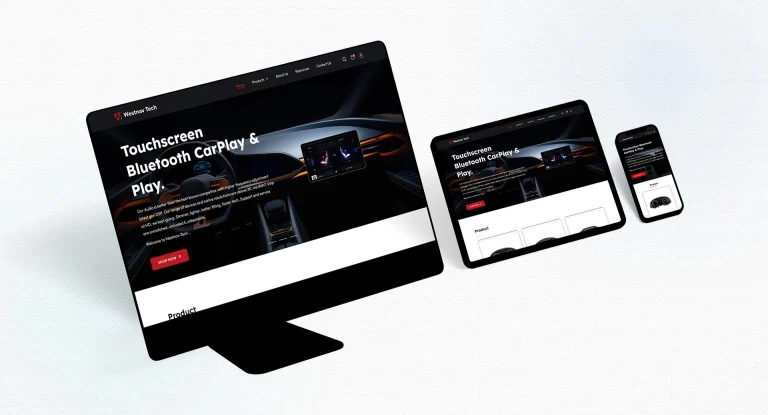
WordPress sites we have built and improved, and what changed for each business.



Process
How a WordPress Retainer Works
Each month runs on the same cycle: prioritize the backlog with you, build on staging, review, release and report the hours used.
-
01. Discovery
We review your site, codebase, and roadmap, and recommend a starting number of monthly hours.

-
02. Onboarding
We audit the codebase, set up staging and Git access, and agree on priorities and response times.

-
03. Plan
Each month starts with a backlog review and a sprint plan agreed with your team.

-
04. Build and test
Work is built and tested on staging, reviewed with you, and deployed through Git.

-
05. Report
You get a monthly report of hours used, work delivered, and what is planned next.

Plans
WordPress Retainer Packages
Choose how many hours you reserve each month. Larger blocks give you better value, and larger teams and multisite platforms get a custom retainer.
Steady fixes
For updates, fixes and small features
10 hours
a month, no long-term contract
- Fixes and small features
- Landing pages and content updates
- Monthly hours report
Active roadmap
For teams shipping new features every month
20 hours
a month, no long-term contract
- Feature development and integrations
- Maintenance can be included
- Priority response
Larger sites and teams
For bigger platforms and in-house teams
40 hours
a month, no long-term contract
- Design and development hours
- Sprint planning with your team
- Monthly roadmap review
Client reviews
Client Reviews of Our Ongoing WordPress Work
“cmsMinds has been a fantastic partner as our WordPress developer agency. The transition from our previous developer was seamless, and their team has been incredibly responsive, detail-oriented, and proactive in troubleshooting any issues that come up. We’ve been very impressed with their communication and turnaround times. Looking forward to continuing the relationship — highly recommend!”
 Zach Denes
-
“cmsMinds has been a reliable vendor for my firm, J. Arthur. We have utilized them for web development projects across several platforms and they are responsive and persistent when it comes to bringing complex technical tasks to completion. I recommend working with them.”
 Jeff St. Onge
-
“cmsMinds is a team of professional web developers that is a great pleasure to work with. They are very responsive and highly skilled. They have been able to help me with all my companies web related projects. I plan to work with them for many years to come.”
 Suave Kajko
-
“cmsMinds has been an incredible web development resource. Their prices are fair and their service is the BEST! Communication and solutions are always quick and easy! I will be using them to assist with many more projects. I truly appreciate the professional service!”
 Wendy Thompson
Not Sure Where to Start?
Book a free 30-minute call, and we will help you estimate how many hours your roadmap needs.
FAQ
WordPress Retainer FAQs
Answers to the questions we hear most before starting a retainer.
What is a retainer?
A retainer is a monthly agreement that reserves development hours with the same team. The hours go to new features, landing pages, integrations, bug fixes, performance and accessibility work, and maintenance. Instead of requesting a new quote for every change, you add requests to a shared backlog and the team works through them in priority order each month.
How is a retainer priced?
A retainer is priced by the hours you reserve each month: 10, 20 or 40 hours. Larger blocks give better value, and larger teams or multisite platforms get a custom retainer. Most clients start with a smaller block and adjust once they see how many hours their backlog really needs. We share the monthly fee for each block on a free 30-minute call.
Is a retainer better than paying per request?
A retainer is better when your site needs development every month; paying per request is better when changes are rare. With a retainer, the same team knows your code, work starts without a new quote each time and a reserved block costs less than the same work quoted request by request. With pay-as-you-go, each request is scoped and quoted separately, which suits occasional fixes but slows steady work.
What is a WordPress development retainer used for?
A WordPress development retainer pays for steady build work after launch: new landing pages and templates, features, integrations, performance and accessibility improvements, and bug fixes. Many teams also put maintenance and small content changes into the same hours. You prioritize the backlog each month, and the report shows where the hours went.
What happens to unused retainer hours?
Unused hours are handled according to the terms agreed at the start. In practice we plan each month so hours are used on your backlog, and when requests are light we suggest work that improves the site, such as Core Web Vitals fixes, accessibility updates or technical debt cleanup. The monthly report shows planned and used hours side by side.
How fast do you respond to retainer requests?
Response times are set in your retainer agreement, and retainer clients get priority over ad hoc requests. Urgent issues such as a broken checkout or a site outage are picked up first, and routine requests are scheduled into the current or next sprint depending on size. Because response times are in writing, you know what to expect before you sign.
Is there a minimum contract length for a retainer?
We ask for an initial commitment of a few months so the team can learn your site and the backlog can settle into a rhythm. After that, the retainer runs month to month, and you can increase, reduce or cancel your hours with advance notice. You own all code written during the retainer, so ending it never locks you out of your own site.
Can a retainer include maintenance and monthly support?
Yes. Many clients put WordPress maintenance into their retainer, so core, theme and plugin updates, backups, security scans and uptime monitoring are handled by the team doing development work. Updates are then tested against the custom code that team wrote. You decide each month how hours are split between support and new features.
Can a retainer start on a site another agency built?
Yes. Many of our retainer clients came from another developer. The retainer starts with a technical audit of the theme, plugins, hosting and code quality, which is documented and shared with you. Urgent issues are fixed first, then the backlog is planned around the risks and opportunities the audit found.
How do I choose a retainer agency?
Choose an agency that shows how hours are planned, used and reported, as well as the monthly price. Ask who works on your site each month, how urgent issues are prioritized, how work is tested before release and what happens to unused hours. A retainer works well with a team that already builds sites like yours, so check case studies and ask for references.
Guides on Building WordPress Development Capacity
-

In-House Team Vs. WordPress Development Company: Which is Right for Your Business?
Not sure whether to hire an in-house team or a WordPress development company? This guide breaks down costs, expertise, and scalability to help you choose the best fit.
-
WordPress Development Company vs. Freelancer: Which is Better for Scaling?
Compare a WordPress development company and a freelancer based on pricing, team expertise, risk, scalability, and maintenance to choose the best fit for your website goals.
-

How to Outsource Web Development– A Comprehensive Guide
When it comes to outsourcing web development, businesses are increasingly turning to external experts for cost efficiency, scalability, and access to specialized skills. In this blog, we break down the essentials of outsourcing, covering everything from selecting the right partner to managing communication and ensuring high-quality deliverables.
WordPress services
Our WordPress Services
Everything we build and support on WordPress, from custom development and migrations to maintenance and performance work.